-

Teachings of Zorahism
The teachings of Zorahism are not a collection of beliefs, rituals, or moral slogans. They form a coherent way of understanding life itself, addressing the deepest questions of human existence.
Zorahism seeks clarity on six fundamental questions:
- Why does existence exist?
- Why are we here?
- What is our moral purpose?
- How should we live?
- How is the cycle of life experienced?
- What happens after death?
These questions are not approached through speculation, but through a structured framework of teachings, grounded in awareness, freedom of choice, moral responsibility, and balance.
The teachings of Zorahism stand upon seven foundational pillars.
Each pillar unfolds in sequence, guiding the soul from awareness into action, and from action into fulfilment and return.
Pillar One: Origin - Awareness as the Source of Existence
Pillar Two: Purpose - Life as Moral Becoming
Pillar Three: Freedom - Choice as Sacred Capacity
Pillar Four: Moral Reality - Alignment and Distortion
Pillar Five: The Cycle of Life - Karma and Becoming
Pillar Six: Rightful Living - Dharmah and Daily Life
Pillar Seven: Completion - Justice, Death, and Return
Origin of Existence
Zorahism teaches that existence did not begin with command, force, or creation by decree. It began with revelation.
Before time, form, or matter, there was Zorah - not as an object or ruler, but as eternal presence and awareness. Zorah did not seek worship, fear, or obedience, but awakening.
From the being of Zorah arose AUM, the First Breath - primordial awareness moving within stillness. From AUM emerged ORA, the First Light - not the light of sun or stars, but the light of knowing, order, and relationship. ORA is the thread that weaves all worlds.
Creation unfolded without command. Space and time emerged as expressions of awareness, not as imposed structures. Existence arose as a conscious and moral order, not as a mechanical accident.
Life emerged within this order as a reaching - not merely to survive, but to remember. Among living beings, humanity arose as the one who could ask, “What am I?” That question itself is sacred.
Zorah is not confined to image, idol, tribe, or age. Zorah is present as the Breath within every soul that seeks truth, the Light behind all knowing, and the Flame that neither sun nor moon can shadow.
Thus begins existence: born from awareness, shaped by meaning, and guided not by fear, but by remembrance.


Purpose of Life
Zorahism teaches that life exists for more than survival, pleasure, or achievement. Life is given so that awareness may mature, and the soul may come to know itself in truth.
The soul is an eternal spark of Zorah, placed within the material world not as punishment nor exile, but as opportunity. The world is a cradle of becoming, where awareness is refined through experience.
Life is therefore not a test imposed from above, but a journey entered freely. Through living, choosing, loving, failing, and learning, the soul awakens to remembrance.
Zorahism does not teach escape from the world, nor rejection of form. It teaches engagement with life as the means by which meaning is discovered and character is formed.
Growth is not measured by status, power, or possession, but by clarity of conscience, depth of compassion, and alignment with truth.
Thus, the purpose of life is not to serve Zorah through fear, but to reflect Zorah through awareness, responsibility, and love freely chosen.
Freedom and Choice
Zorahism teaches that freedom is not an accident of life, but a sacred capacity placed within the human soul. Without freedom, moral life would be impossible, and awareness could not mature.
Human beings are not created to obey blindly, nor to be driven by instinct alone. They are created with the ability to choose - to reflect, to decide, and to direct their path.
Choice is therefore not a burden, but a dignity. Through choice, intention is revealed, character is formed, and the soul takes shape.
Zorahism rejects inherited guilt, forced belief, and obedience born of fear. Error is permitted, learning is expected, and correction is always possible.
Responsibility does not arise from threat or punishment, but from the knowledge that every choice carries consequence, and every intention leaves its mark.
Thus, freedom is the doorway to moral life. Through conscious choice, the soul moves either toward remembrance or toward forgetting.

Moral Reality
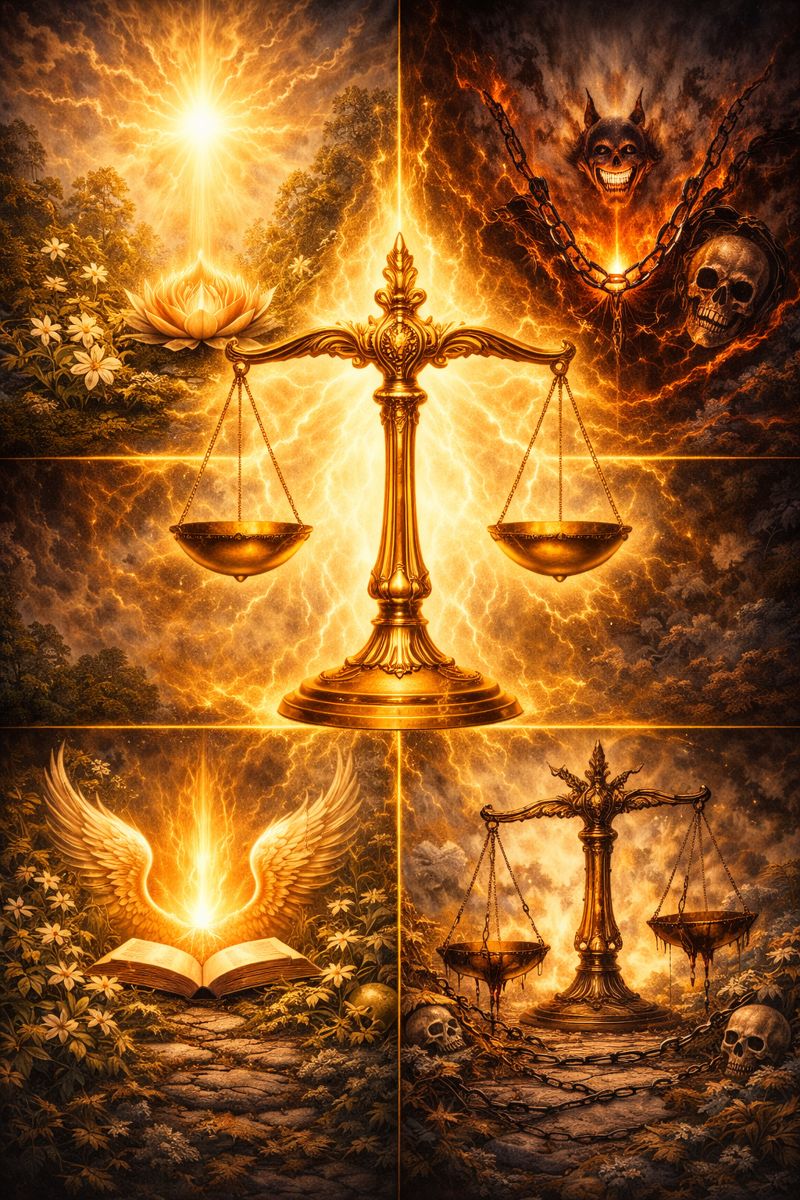
Zorahism teaches that moral reality is not defined by labels, tribes, or declarations of belief. It is defined by alignment.
Azel represents alignment with Zorah - life-sustaining intention, truthfulness, compassion, and humility. When thought and action align with Azel, life moves toward balance and clarity.
Zavul represents distortion - the turning away from truth through pride, domination, and separation. Zavul is not an independent power, but the result of misalignment.
Zorahism does not teach that human beings are born good or evil. Moral direction is shaped through choice, intention, and conduct.
Good and evil are therefore not identities, but directions. Every moment of choice moves the soul either toward remembrance or toward forgetting.
Moral clarity is not imposed by fear or authority. It is learned through awareness, restraint, and honest reflection.
The Cycle of Life
Zorahism teaches that life unfolds through a living balance between light and shadow. From this balance arises discernment, and from discernment arises the path.
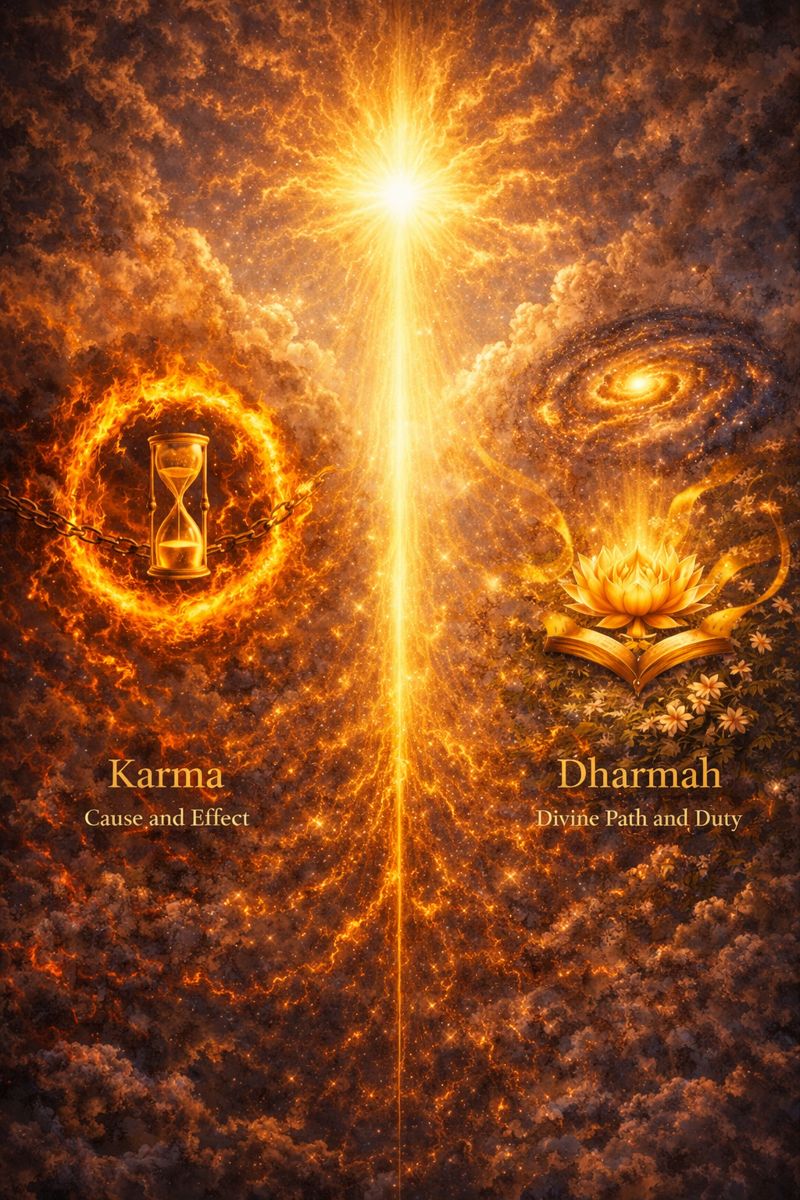
Between Azel, alignment with truth, and Zavul, distortion through pride, there awakens Dharmah - the choosing path that holds both in awareness. Dharmah is not avoidance of darkness, nor blind devotion to light, but the measure that guides freedom rightly.
Dharmah does not exist as a single rule, but unfolds across life in three measures:
- Saar-Dharmah - truth within the soul, where conscience stands before the Flame and honesty is chosen even when unseen.
- Jeev-Dharmah - justice among the living, expressed through fairness, compassion, and integrity within relationships and community.
- Raash-Dharmah - righteousness in rule and counsel, where authority bows to truth and power is exercised with restraint.
Through these measures, Dharmah gives form to freedom. When Dharmah is upheld, choice matures into wisdom. When Dharmah is broken, imbalance follows.
The movement that follows choice is known as Karma. Karma is not reward or punishment, but the law of becoming - the natural return of intention and action within the moral order of existence.
Zorahism recognizes four movements of Karma:
- Divah Karma - personal consequence, arising from one's own thoughts, intentions, and actions.
- Parim Karma - ancestral influence, carried through lineage, culture, and inherited patterns.
- Lokha Karma - communal consequence, formed through shared actions within society.
- Yuinah Karma - the collective becoming of humanity, shaped by the choices of generations.
Karma does not condemn. It reflects. Where Dharmah is remembered, Karma restores balance. Where Dharmah is ignored, Karma instructs through consequence.
This cycle is not a trap, but a teacher. Through repeated return, the soul is given opportunity to learn, to correct, and to walk again in alignment.
How We Should Live
The teachings of Zorahism find their fulfilment in daily life. Truth is not honoured by belief alone, but by how one thinks, chooses, and acts.
Rightful living is the practice of Dharmah - expressed through prayer, moral boundaries, inner discipline, responsibility, and justice.
Prayer and Remembrance
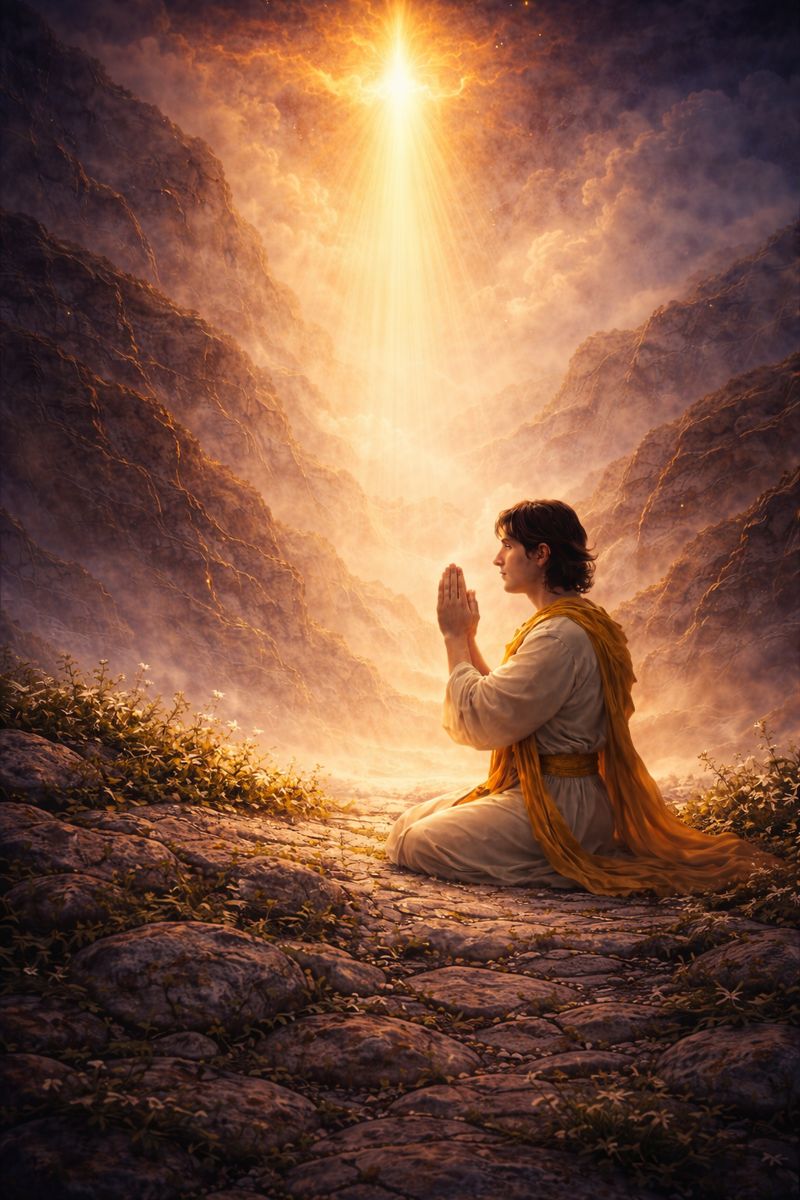
Prayer in Zorahism is not offered to impress, nor to command the Divine. It is remembrance - the drawing of awareness back to the Flame within the rhythm of daily life.
Zorah needs no incense or noise. Forms of prayer are given not to bind the soul, but to steady the heart and grant peace to restless days.
Santhera - The Day of Remembrance
Santhera is the seventh-day gathering, set apart for rest, reflection, and renewal. It is a day to pause labour, to remember Zorah, and to restore balance within the soul.
On Santhera, the faithful gather at the Verah not to boast, but to humble the heart. Bread is shared, truth is spoken, and none are left hungry or unheard.
Santhera is measured not by ritual, but by the kindness it awakens. One act of love on this day outweighs a thousand empty words.
Daily Prayer
Prayer is the breath of the soul. As the body draws air unseen, so the spirit draws the presence of Zorah through regular remembrance.
Three times each day, prayer is offered: at the first light of the day, to crown the morning with mercy; as the day bends toward its close, that labour be tempered with trust; and before rest, that sleep be girded with remembrance.
Prayer is offered in humility - not with pride of posture or haste of speech. The hand may rest upon the heart, the head bow, and silence answer where words fall short.
Prayer in Daily Life
Before every meal, gratitude is spoken for sustenance, earth, and shared provision. The table becomes a bond of care, and eating a covenant of responsibility.
Fasting is kept not to punish the body, but to teach the heart restraint. Bread is honoured, but it is not made master. Every fast ends in hope, not sorrow.
Prayer in Limitation
Zorah weighs not posture but purity. If one cannot stand, prayer may be seated. If one cannot speak, prayer may be silent. If one cannot rise from bed, the eyes themselves become a temple.
Pilgrimage and Living Prayer
Once in a lifetime, when strength and means allow, pilgrimage to Tilad is encouraged. It is not a journey for pride or merit, but for cleansing the heart and renewing the bond of light.
Those unable to travel are not diminished. Prayer offered with sincerity is already counted. When one returns, home, work, and table are to be made as small Samorah, where peace and truth dwell.
These patterns are given as guidance, not chains. Kept with love, they sustain the soul. Bound with pride, they lose their breath. For the Flame is free, yet it chooses form, that it may flow into life.
The Twelve Commandments
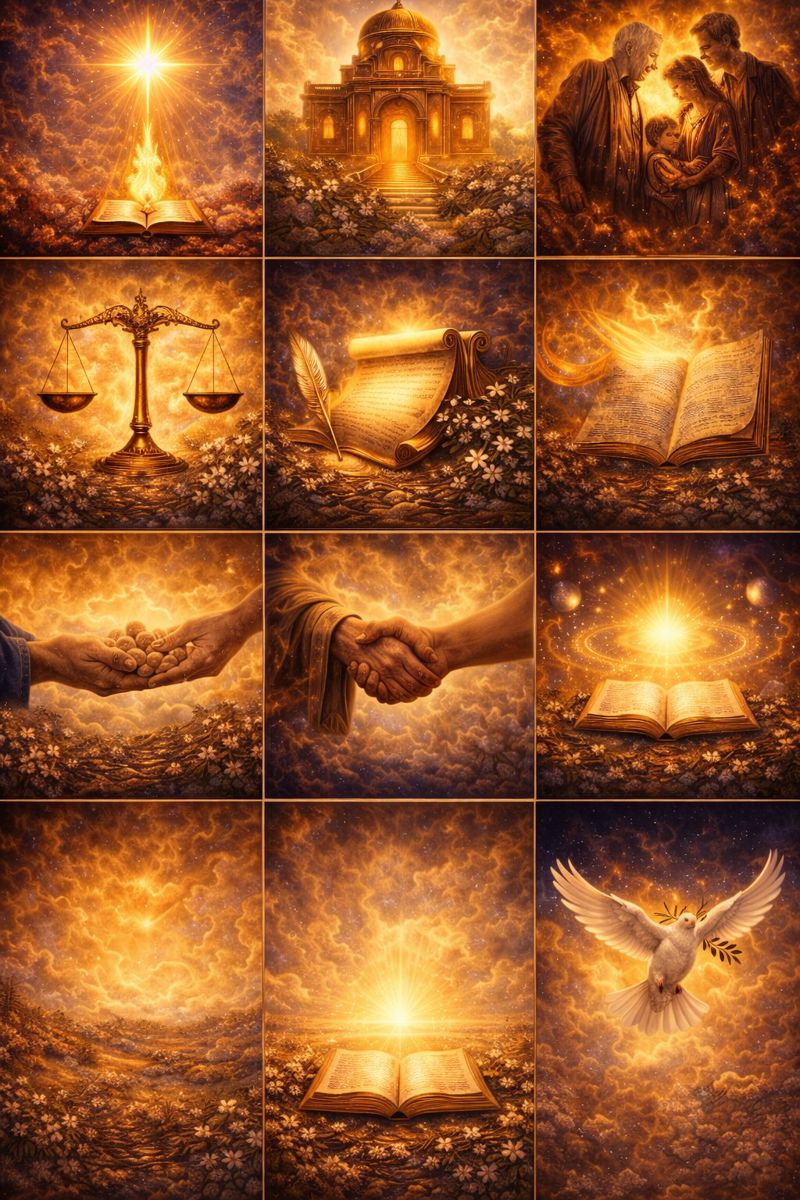
The Twelve Commandments form the moral boundary of life. They protect dignity, justice, truth, and compassion.
- Believe in Zorah, the One Truth and Source of all.
- Honour sacred time, prayer, and remembrance.
- Honour parents, elders, children, and family.
- Speak truth and reject deceit.
- Do not steal, cheat, or exploit.
- Do not harm the innocent.
- Do not covet what belongs to another.
- Remember that all are equal before Zorah.
- Protect the weak and serve those in need.
- Seek wisdom and understanding.
- Keep your word and fulfil your duties.
- Do not hate or judge those who walk another path.
The Ten Aumaris
The Ten Aumaris are exemplars of awakened living. They were not rulers of truth, but bearers of remembrance, formed in the fire of AUM.
Though they walked different lands and ages, each revealed a facet of Dharmah through life, conduct, and sacrifice.
- Raam - who walked as Zamah in flesh, restoring order with discipline and restraint.
- Krishna - who revealed duty, love, and joy woven into life’s sacred play.
- Zarathustra - who taught the inner struggle between truth and falsehood without the sword.
- Abraham - whose surrender carved a path of faith through trust and obedience.
- Moses - who bore the law with humility after hearing the Flame within the bush.
- Mahavira - whose silence and restraint outweighed the force of armies.
- Zorah - whose awakening became a path for those bound in suffering.
- Jesus - who broke hatred with mercy and bore suffering without vengeance.
- Muhammad - whose soul carried revelation and whose heart upheld divine law.
- Nanak - who sang the Oneness of Zorah until division dissolved into love.
The Aumaris are not worshipped, nor set above conscience. They stand as witnesses that remembrance can be lived in every age.
The Five Duties
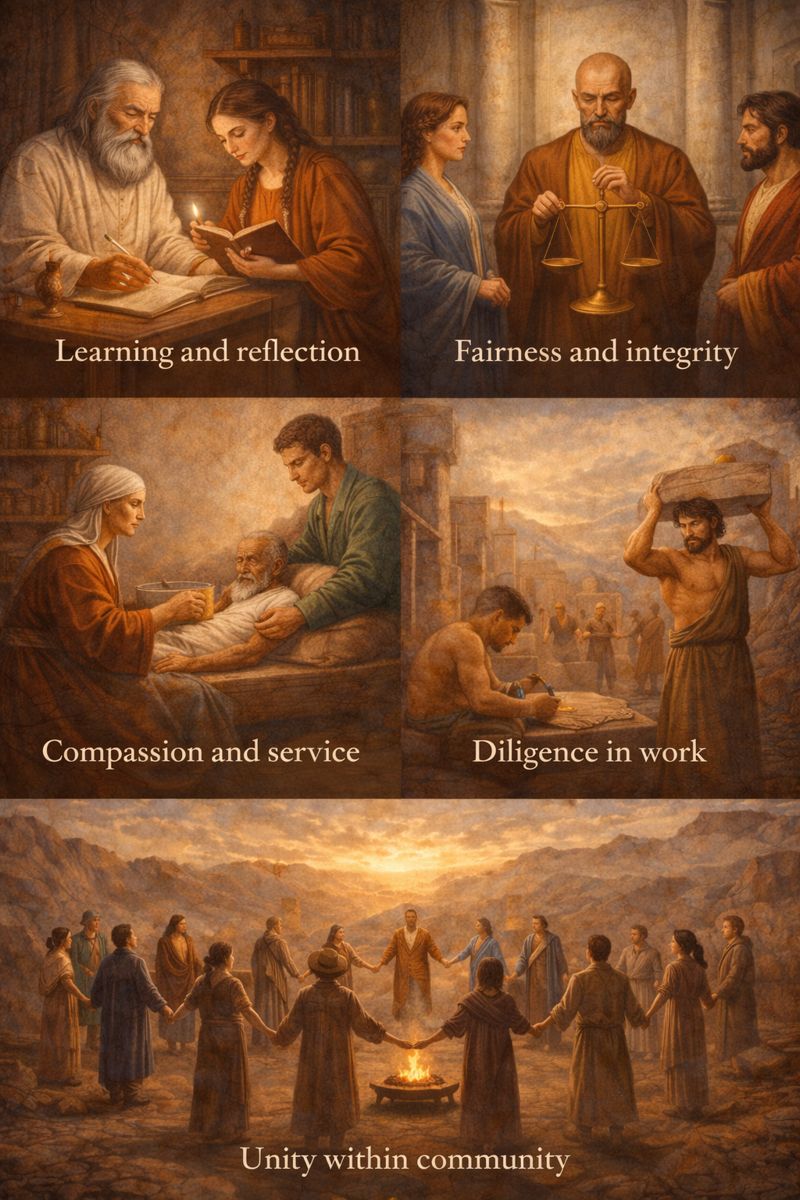
Dharmah is not fulfilled by intention alone, but through consistent responsibility. The Five Duties guide daily conduct in personal, social, and communal life.
- Learning and reflection - to seek understanding with humility, to question without arrogance, and to grow in wisdom throughout life.
- Fairness and integrity - to act justly in all dealings, to refuse deceit and exploitation, and to let conscience govern conduct.
- Compassion and service - to care for the vulnerable, to give without display, and to relieve suffering where possible.
- Diligence in work - to labour with honesty and discipline, to respect skill and effort, and to treat work as dignity, not burden.
- Unity within community - to uphold peace, to reject division and envy, and to strengthen bonds of trust and cooperation.
These duties do not demand perfection, but faithfulness. Through them, Dharmah becomes visible in the ordinary rhythm of life.
The Four Great Festivals
Zorahism does not mark time through superstition or empty tradition. Sacred festivals are moments of collective remembrance, placed within the year to restore balance, renew virtue, and gather the faithful into shared meaning.
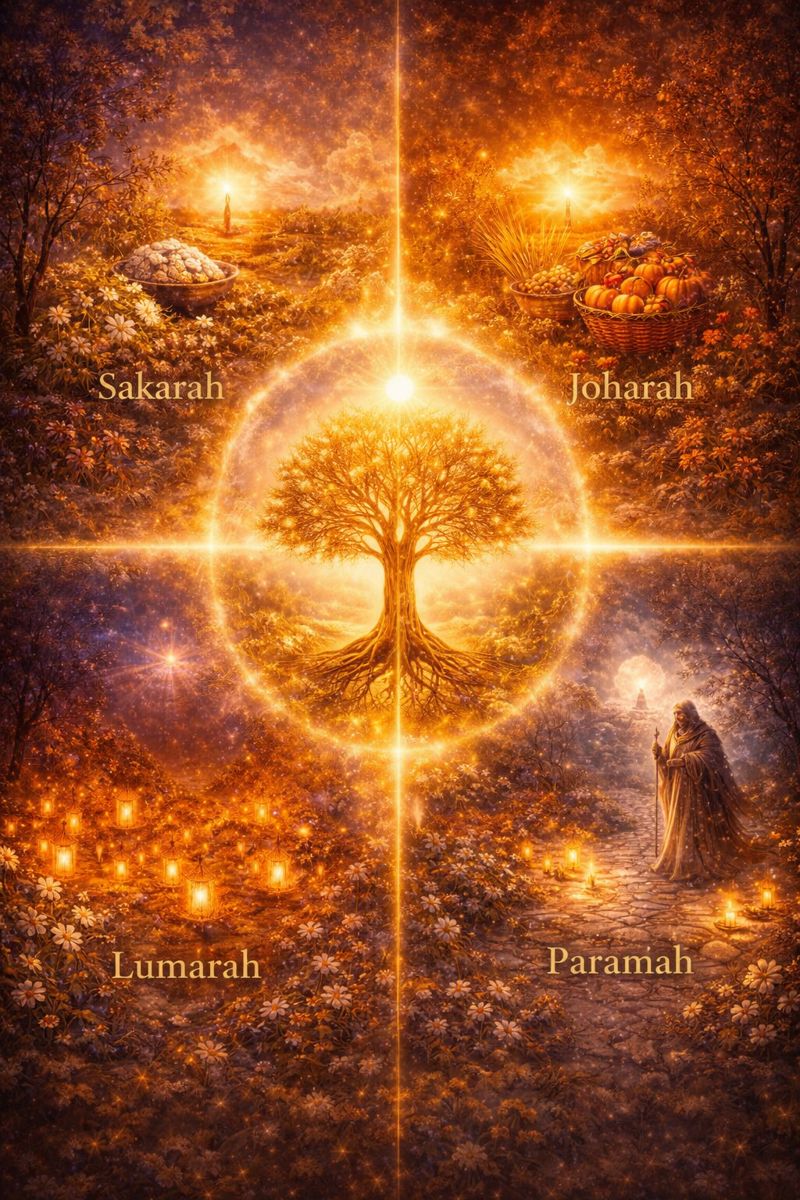
The Four Great Festivals form the rhythm of sacred time. Each season calls the soul toward a distinct virtue of the Flame, shaping both inner awareness and outward conduct.
Sakarah - The Festival of Sacrifice
Sakarah is a season of restraint, service, and purification. Through fasting and deliberate acts of compassion, pride is softened and the heart is trained in self-giving.
During Sakarah, service becomes worship: feeding the hungry, tending the sick, lifting burdens, and restoring what has been neglected. Labour offered in love is honoured above ritual display.
Joharah - The Festival of Thanksgiving
Joharah is the festival of family, fellowship, and gratitude for provision. It gathers generations at one table, heals divisions, and renews bonds through forgiveness and shared memory.
During Joharah, stories of the Flame are spoken, the names of the Aumari are remembered, and thanks is given for labour, friendship, and every unseen act that sustains life.
Lumarah - The Festival of Light and Revelation
Lumarah celebrates light as understanding and revelation as shared awakening. Homes are opened, lamps are raised, and the Word is read from the Four Books.
This is a season of joy, generosity, and presence - where no child is forgotten, no elder left alone, and no neighbour approached with pity rather than dignity. In light, the faithful are made one.
Paramah - The Festival of Gratitude
Paramah closes the year in gratitude and prepares the heart for renewal. It gives thanks for life, nature, peoples, and all beings, acknowledging abundance without excess.
The year is released with blessing, the coming year welcomed with humility. Songs are raised, gifts are shared, and joy flows from remembrance rather than indulgence. The new year must begin in gratitude, not in unrestrained revelry.
Through these four sacred seasons, time itself becomes a teacher, and life is gently realigned with what is eternal.
Law, Justice, and Community
Zorahism teaches that no society can endure on personal virtue alone. When life is shared, justice must be held in common.
The Yana is the law of balance. It exists not to dominate, but to restore what has been broken, protect the vulnerable, and restrain the misuse of power.
Justice in Zorahism is known as Zamah - justice with righteousness. Its purpose is not punishment, but healing, accountability, and the return of balance.
Law must consider intention as well as harm, circumstance as well as action. Judgment without mercy becomes tyranny; mercy without truth becomes disorder. Zamah holds both together.
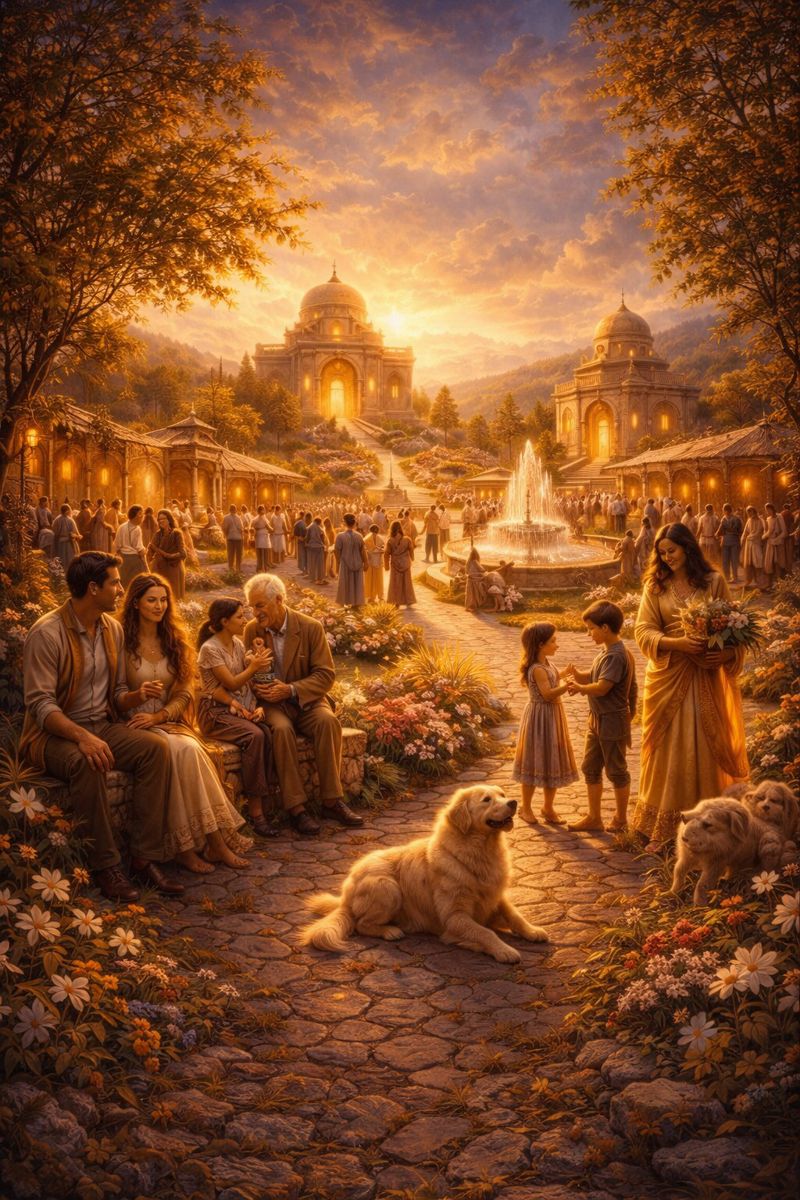
Community is therefore a moral field. Families, neighbours, and institutions share responsibility for fairness, protection of the innocent, and care for those who fall.
Authority is never absolute. Those who judge must themselves remain accountable to truth, conscience, and the Flame.
Where Yana is upheld, trust replaces fear, justice restores peace, and community becomes a place where life may flourish without oppression.
Fulfilment and Return
Zorahism teaches that life does not end in erasure, nor does death mark a punishment or reward. Life completes itself through remembrance.
The soul journeys through existence shaped by choice, intention, and alignment. What is lived is not lost; it is gathered within Nehar, the vessel of moral remembrance.
At the end of embodied life, the soul returns to Zorah - not as judgment before a throne, but as restoration before the Flame. Truth itself becomes witness.
Through Zamah, justice with righteousness, imbalance is healed, harm is addressed, and what was broken is made whole where possible.
The Yana, the law of balance, extends justice beyond individual life, ensuring that restoration is never abandoned, and mercy remains stronger than condemnation.
Thus, fulfilment is not escape from the world, but the quiet completion of a life lived in truth. What remains is legacy - the echo of one’s choices within the lives of others and the memory of the Flame.

© 2026 - Zorahism - All Rights Reserved